

Table of Contents
- Shilajit at a Glance
- What Is Shilajit Made Of?
- What Is Shilajit Used For?
- What Is Shilajit Good For? Here’s What the Research Says
- Shilajit Uses: Traditional vs Research-Backed
- How to Consume Shilajit
- What Is the Best Time to Take Shilajit?
- Is Shilajit Safe?
- How to Choose Among the Best Shilajit Brands in India 2027
- Shilajit in Modern Herbal Wellness
- What the Research Actually Says About Shilajit
- The Bottom Line
- FAQ
Quick Summary
Shilajit is a naturally occurring substance formed in mountainous regions and traditionally used as an Ayurvedic wellness ingredient. Research has investigated its potential effects on areas such as testosterone, male reproductive health and physical performance, but more high-quality human studies are needed before broad health claims can be established.
Shilajit is a naturally occurring, mineral-rich substance traditionally used in Ayurveda and other traditional systems of medicine. It is found in mountainous regions and contains a complex mixture of organic compounds, minerals and other naturally occurring substances, including fulvic acid and dibenzo-α-pyrones.
But what is Shilajit actually made of? What is Shilajit used for today? And do the popular claims around energy, stamina and testosterone have enough scientific evidence behind them?
The answer is more nuanced than many supplement labels suggest. Some early human studies are promising, but research on Shilajit is still limited, and the quality of the product matters considerably.
Shilajit at a Glance
| Shilajit Fact | Details |
| What is Shilajit? | A naturally occurring, mineral-rich substance found in mountainous regions and traditionally used in Ayurveda. |
| What is Shilajit made of? | A complex mixture containing humic substances, fulvic acid, dibenzo-α-pyrones, minerals and other organic compounds. |
| Also known as | Mumiyo, Mumie or Moomiyo in different regions. |
| Traditional use | Traditionally used as a Rasayana or rejuvenating substance in Ayurveda. |
| Common Shilajit uses | Traditionally associated with vitality, energy, stamina and male wellness. |
| Key compounds studied | Fulvic acid and dibenzo-α-pyrones are among the compounds frequently discussed in Shilajit research. |
| Available forms | Resin, capsules, powders and other standardized preparations. |
| Research status | Some human studies have reported promising findings, but larger and better-controlled studies are still needed. |
| Quality concern | Raw or poorly processed Shilajit may contain unwanted contaminants, including heavy metals. |
| Important note | Traditional use should not automatically be interpreted as proof of a medical benefit. |
What Is Shilajit Made Of?
So, what is Shilajit made of?
The simple answer is: many different naturally occurring compounds rather than one active ingredient.
Research has identified compounds such as fulvic acid, humic substances and dibenzo-α-pyrones, along with various minerals and other organic components. Recent chemical analysis of a Himalayan Shilajit sample also identified fulvic acid, dibenzo-α-pyrones and phenolic compounds.
Fulvic Acid
Fulvic acid is one of the compounds most commonly associated with Shilajit. It is a naturally occurring organic substance found within humic materials.
Because fulvic acid is frequently discussed in connection with antioxidants and other biological activity, it has become a major focus of Shilajit research. However, findings from laboratory or mechanistic studies should not automatically be interpreted as proven benefits in humans.
Dibenzo-α-Pyrones
Dibenzo-α-pyrones are another group of compounds identified in Shilajit. They have attracted research interest because of their potential biological activity.
The overall composition is much more complicated than simply saying that Shilajit is “fulvic acid.” It is better understood as a complex natural mixture.
What Is Shilajit Used For?
Traditionally, Shilajit has been used as a general rejuvenating and vitality-supporting substance.
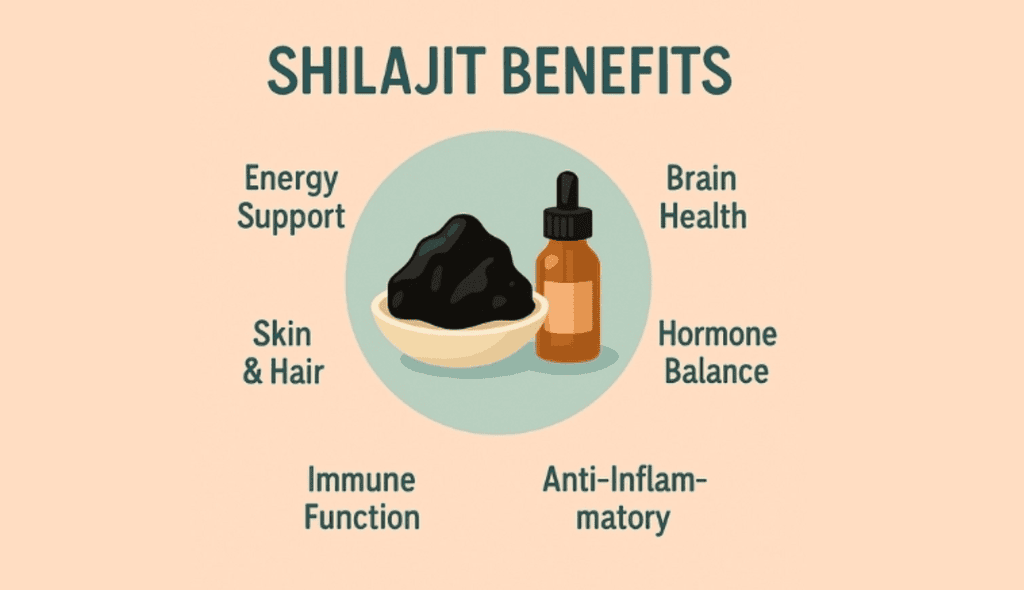
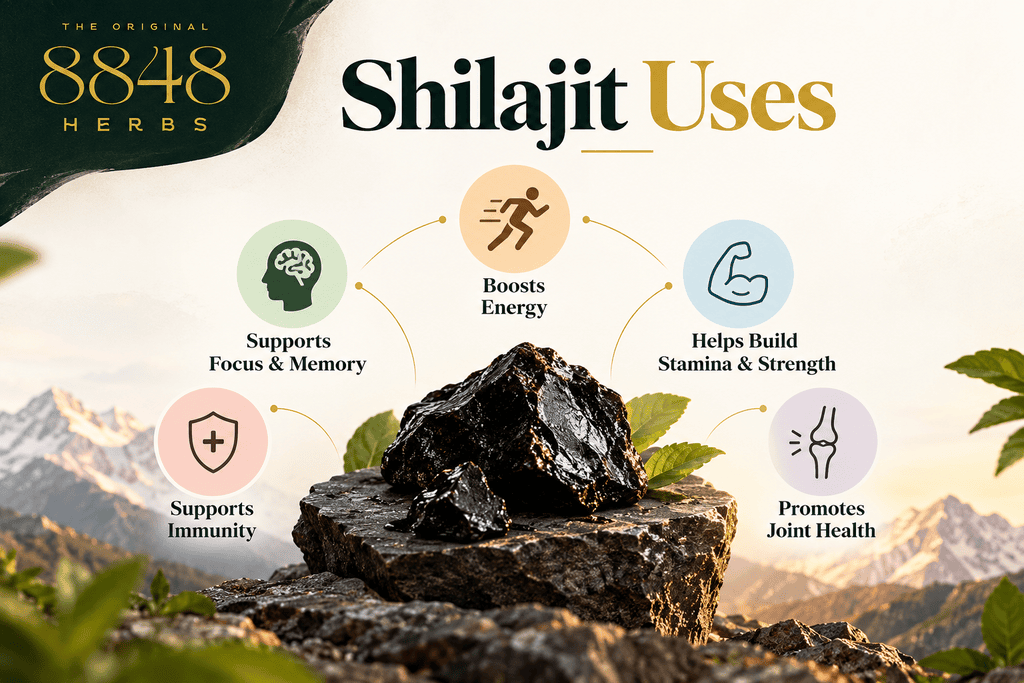
Today, people commonly look at Shilajit for areas such as:
- Daily energy and vitality
- Physical stamina
- Male wellness
- Testosterone support
- Reproductive health
- Exercise and recovery
- General Ayurvedic wellness
But what is Shilajit used for traditionally and what has actually been demonstrated in clinical research are two different questions.
Some areas have been investigated in human studies, while others are based primarily on traditional use, laboratory research or animal studies.
That distinction is important when evaluating any herbal or Ayurvedic ingredient.
What Is Shilajit Good For? Here’s What the Research Says
If you search for what is Shilajit good for, you will find a long list of claims. Scientific research, however, supports a much narrower picture.
1. Testosterone and Male Hormonal Health
One of the better-known areas of Shilajit research is testosterone.
A randomized, double-blind, placebo-controlled study involving healthy men aged 45–55 examined purified Shilajit at 250 mg twice daily for 90 days. The researchers reported increases in total testosterone, free testosterone and DHEAS compared with placebo.
That is an interesting finding, but it should not be interpreted as proof that every Shilajit supplement increases testosterone.
The study involved a specific purified preparation, a defined dose and a particular group of participants. More research would be needed to establish how consistently these findings apply to different products and populations.
2. Male Reproductive Health
Another clinical study looked at processed Shilajit in men with oligospermia, or low sperm concentration.
Among participants who completed the study, researchers reported improvements in several semen parameters and testosterone after 90 days of supplementation.
Again, this is promising but should be interpreted carefully. The study was relatively small, and findings from a specific processed preparation cannot automatically be applied to every Shilajit product available commercially.
3. Energy and Physical Performance
Shilajit is traditionally associated with vitality and physical endurance, which has also encouraged research into its possible effects on exercise and fatigue.
Earlier reviews have described findings involving physical performance and fatigue, but they also point out that relatively few well-controlled human studies have been conducted.
More recent research continues to investigate Shilajit resin and physical performance, but larger controlled trials are still needed to establish consistent effects.
Shilajit Uses: Traditional vs Research-Backed
One of the easiest ways to understand Shilajit is to separate traditional uses from scientifically established effects.
| Area | Traditional Interest | Current Research |
| Vitality | Strong traditional association | Some preliminary evidence |
| Energy | Traditionally used for rejuvenation | Limited human evidence |
| Testosterone | Increasingly popular modern use | Some controlled human evidence |
| Male reproductive health | Traditional use | Preliminary clinical evidence |
| Exercise performance | Used traditionally for strength and vitality | Early research |
| Antioxidant activity | Associated with its compounds | Mainly laboratory/mechanistic evidence |
| General wellness | Common Ayurvedic use | Not enough evidence for broad medical claims |
This distinction matters because a compound can have an interesting biochemical mechanism without having a clinically meaningful effect in humans.
How to Consume Shilajit
Shilajit is commonly sold in several forms, including resin, capsules and powders.
How to consume Shilajit depends on the specific formulation and the manufacturer’s instructions. Resin products may be dissolved in a warm beverage, while capsules or standardized extracts are generally taken according to their labelled serving instructions.
There is no universal dosage that applies to every Shilajit product because concentration, purification and formulation can differ.
For this reason, it is better to follow the dosage specified for a tested, properly labelled product rather than assuming that more Shilajit will provide greater benefits.
What Is the Best Time to Take Shilajit?
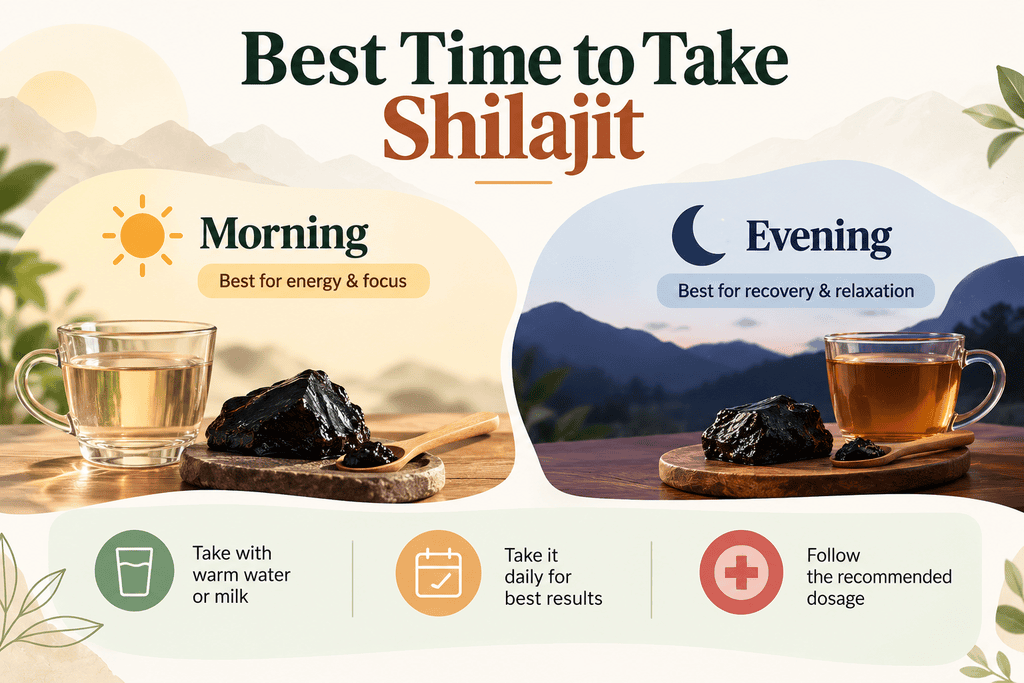
The best time to take Shilajit is not firmly established by clinical research.
Many products recommend taking it earlier in the day or with food, but there is limited evidence showing that one specific time is superior for everyone.
The more important factors are product quality, the recommended serving, individual tolerance and consistency.
If Shilajit is new to your routine, following the product’s directions is a more sensible approach than experimenting with large doses.
Is Shilajit Safe?
This is one of the most important questions to ask before buying Shilajit.
The word “natural” does not automatically mean that a product is free from safety concerns.
Raw or inadequately processed Shilajit can contain contaminants, including heavy metals. Research has also found variation in the elemental composition of Shilajit and Shilajit-based supplements, highlighting the importance of quality control and standardized testing.
A review of Ayurvedic products has similarly highlighted concerns about heavy-metal contamination in some commercially available preparations.
What Should You Check Before Buying?
When evaluating a Shilajit product, look for:
1. Purification information
The product should clearly explain whether the Shilajit has been purified and processed for consumption.
2. Ingredient transparency
The label should identify what the product contains rather than relying only on broad claims such as “Himalayan formula.”
3. Testing and quality documentation
Independent laboratory testing or certificates of analysis can provide useful information about purity and contaminants.
4. Clear dosage instructions
Avoid products that do not clearly explain serving size or recommended consumption.
5. Traceable sourcing
Information about where the Shilajit comes from can help consumers understand the product better.
How to Choose Among the Best Shilajit Brands in India 2027
Searching for the best Shilajit brands in India 2027 can quickly turn into a comparison of marketing claims.
Instead of choosing a product only because it says “pure,” “premium” or “100% natural,” compare the information behind those claims.
Look at the source, form of Shilajit, purification process, ingredient list, serving information and quality testing. A brand that provides clear information about what is in its product and how it is tested gives consumers more useful information than one that relies mainly on broad wellness promises.
For a product such as Shilajit, transparency is more useful than a long list of claimed benefits.
Shilajit in Modern Herbal Wellness
Shilajit fits naturally into the growing interest in Himalayan and Ayurvedic wellness products. Its traditional history, distinctive composition and growing body of research make it an interesting ingredient for people exploring plant- and mineral-based wellness.
At 8848 Herbs, Shilajit is used as part of a broader Himalayan wellness approach, including products designed around naturally sourced ingredients and everyday vitality.
The important point is that Shilajit should be viewed as one ingredient within a wellness routine, rather than as a replacement for a balanced diet, regular physical activity, adequate sleep or appropriate medical care.
What the Research Actually Says About Shilajit
So, what is Shilajit really good for?
The current research provides some interesting signals, particularly around testosterone, male reproductive parameters and aspects of physical performance. However, the overall evidence base is still relatively small compared with more extensively studied nutritional ingredients.
There is also a major difference between studying a standardized or purified preparation in a controlled clinical trial and buying an unspecified Shilajit product online.
That is why claims such as “boosts testosterone,” “increases stamina,” or “works for everyone” should be viewed critically.
The more responsible conclusion is that Shilajit is a traditional natural substance with promising but still developing scientific evidence.
The Bottom Line
Shilajit has a long history in Ayurveda and is now being studied for several potential wellness applications. The research is particularly interesting around testosterone and male reproductive health, but the evidence is not strong enough to support every claim commonly made online.
If you are considering Shilajit, focus less on finding the product with the longest list of benefits and more on purity, processing, transparency and quality testing. That is ultimately what makes a Shilajit product worth considering.
FAQ
What is Shilajit?
Shilajit is a naturally occurring, mineral-rich substance found in mountainous regions and traditionally used in Ayurveda. It contains a complex mixture of organic compounds, minerals and substances such as fulvic acid and dibenzo-α-pyrones.
What is Shilajit used for?
Traditionally, Shilajit has been used for rejuvenation, vitality and general wellness. Modern research has explored areas including testosterone, male reproductive health and physical performance.
What is Shilajit made of?
Shilajit contains a complex mixture of organic and inorganic substances. Compounds commonly discussed in research include fulvic acid, humic substances and dibenzo-α-pyrones, along with minerals.
What is Shilajit good for?
Research has investigated Shilajit for areas such as testosterone and male reproductive health, while other commonly promoted benefits are based mainly on traditional use or early laboratory research.
What is the best time to take Shilajit?
There is no universally established best time based on strong clinical evidence. Follow the serving instructions provided for the specific product and consider individual tolerance.
How do you consume Shilajit?
Shilajit is available as resin, capsules, powders and other formulations. Consumption depends on the product, so the manufacturer’s recommended serving should be followed.
Is Shilajit safe to take every day?
Safety depends on the product, dose, purification and individual circumstances. Because contamination is a concern with some Shilajit and Ayurvedic products, choosing a properly processed and tested product is important.
How do I choose a good Shilajit product?
Check the source, purification process, ingredient list, serving instructions and available quality-testing information. Avoid choosing a product solely because of aggressive health claims.