

Table of Contents
- Why Are Omega-3 Fatty Acids Important?
- Omega-3 Benefits for Heart Health
- How Omega-3 Supports Brain Health
- Omega-3 Benefits for Skin
- Omega-3 Fatty Acids Benefits: EPA, DHA and ALA Compared
- Omega-3 Capsules Benefits: Are Supplements Worth Taking?
- How Much Omega-3 Do You Actually Need?
- Best Food Sources of Omega-3
- What Happens If You Don’t Get Enough Omega-3?
- Are Omega-3 Supplements Safe?
- How to Add More Omega-3 to Your Daily Diet
- Omega-3: Food or Supplement?
- Omega-3 Benefits: What Does the Research Actually Show?
- The Bottom Line
- FAQ
Quick Summary
Omega-3 fatty acids are essential fats that support normal cell function and play important roles in heart, brain, eye and overall health. Found in foods such as fatty fish, flaxseeds, chia seeds and walnuts, omega-3s are also available as supplements, although the benefits of supplementation can vary depending on the type, dose and individual needs.
Omega-3 fatty acids are often described as “good fats,” but their role in the body goes much deeper than that. These essential fats are part of cell membranes and are involved in several processes related to the heart, brain, eyes, immune system and other organs. The three main omega-3 fatty acids are ALA, EPA and DHA, each with different dietary sources and biological roles.
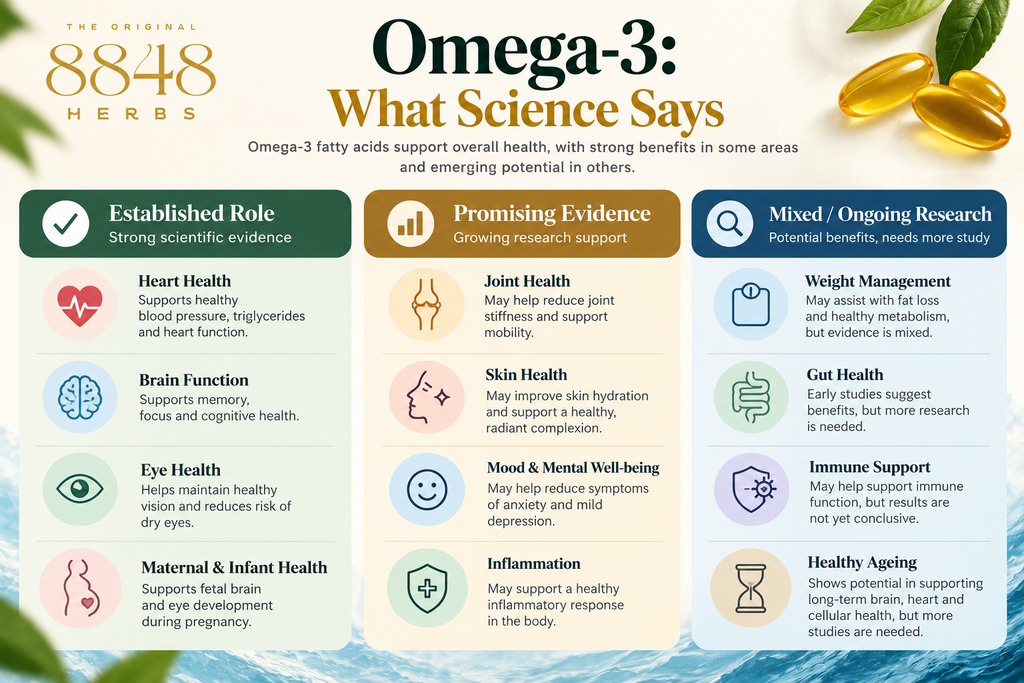
You may have heard that omega-3 can support heart health, improve brain function, benefit the skin or help during pregnancy. Some of these claims are supported by research, while others are still being investigated. Understanding the difference is important, particularly if you are considering omega-3 capsules or other supplements.
Why Are Omega-3 Fatty Acids Important?
Unlike some nutrients that the body can produce on its own, alpha-linolenic acid (ALA) is an essential fatty acid. This means it needs to come from the diet.
EPA and DHA are different. The body can make small amounts of EPA and DHA from ALA, but the conversion is limited. Therefore, foods containing EPA and DHA, such as fatty fish and seafood, are the most practical dietary sources of these long-chain omega-3s.
Omega-3 fatty acids are incorporated into cell membranes throughout the body. DHA is particularly concentrated in the brain and retina, where it contributes to normal structure and function.
The Three Types of Omega-3
| Type | Full Name | Main Sources | What Makes It Different |
| ALA | Alpha-linolenic acid | Flaxseed, chia, walnuts, plant oils | Essential fatty acid that must come from the diet |
| EPA | Eicosapentaenoic acid | Fatty fish, seafood, fish oil | Extensively studied for cardiovascular health and triglycerides |
| DHA | Docosahexaenoic acid | Fatty fish, seafood, algal oil | Particularly concentrated in the brain and retina |
Omega-3 Benefits for Heart Health
Heart health is one of the areas in which omega-3 has been studied most extensively.
Eating fish and seafood as part of a balanced diet is associated with cardiovascular benefits. Fatty fish are particularly rich in EPA and DHA. The American Heart Association recommends eating two servings of fish, particularly fatty fish, per week as part of a heart-healthy dietary pattern.
Research also shows that EPA and DHA can lower triglyceride levels. However, that does not mean that every omega-3 capsule prevents heart disease. Clinical trials of omega-3 supplements have produced mixed results depending on the population, formulation and dose.
How Omega-3 Relates to Cardiovascular Health
Omega-3-rich foods
↓
EPA + DHA intake
↓
Effects on blood lipids and other cardiovascular pathways
↓
Part of an overall heart-healthy diet
The distinction between eating fish and taking a supplement matters. Seafood provides omega-3 alongside protein and other nutrients, while a capsule delivers a more concentrated amount of selected fatty acids.
What About Triglycerides?
One of the more established effects of EPA and DHA supplementation is lowering blood triglyceride levels. High-dose prescription omega-3 preparations are sometimes used under medical supervision for people with elevated triglycerides. These should not be confused with ordinary over-the-counter supplements.
How Omega-3 Supports Brain Health
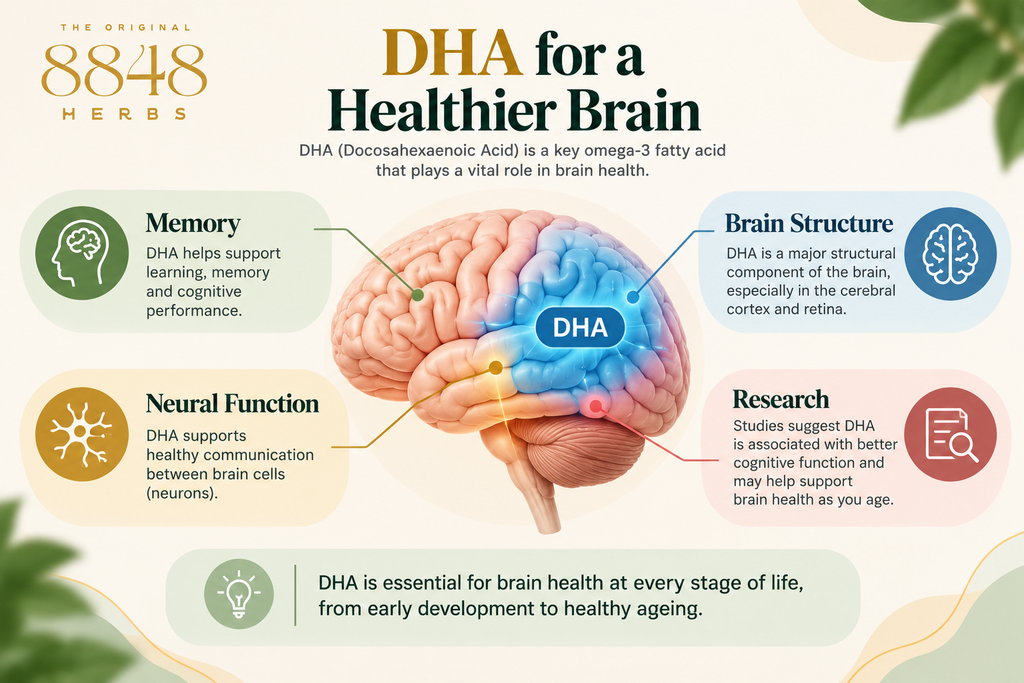
The brain contains a high concentration of DHA, which forms part of neuronal cell membranes. This is one reason DHA has received considerable attention in research on brain health and cognitive function.
Observational studies have found associations between eating fish or consuming more omega-3 and certain measures of cognitive health. However, clinical trials have not consistently shown that taking omega-3 supplements improves cognitive function in healthy older adults.
So, while DHA is clearly important to normal brain structure and function, it would be too strong to say that taking an omega-3 supplement automatically improves memory or prevents dementia.
DHA and the Brain
DHA
→ Important component of brain cell membranes
→ Supports normal neural structure
→ Particularly concentrated in brain tissue
→ Continues to be studied for cognitive health
The takeaway is less about finding a “brain-boosting” capsule and more about maintaining adequate nutrition over the long term.
Omega-3 Benefits for Skin
The connection between omega-3 and skin health starts with the role of essential fatty acids in cell structure.
A true essential fatty acid deficiency can cause rough, scaly skin and dermatitis, although clinically significant deficiency is uncommon in healthy people.
Omega-3 fatty acids are also involved in biological pathways related to inflammation and cell signalling. This has led researchers to investigate their potential role in various skin conditions.
However, it is important not to turn this into a blanket claim that omega-3 supplements can treat every skin concern.
What Does Omega-3 Do for the Skin?
Adequate dietary fat intake contributes to normal cell function, including the cells that make up the skin.
A diet containing sources of omega-3 may therefore form part of an overall nutrition strategy for maintaining healthy skin.
But skin health also depends on many other factors, including hydration, protein intake, vitamins and minerals, sun exposure, skincare habits, sleep and underlying health conditions.
Omega-3 Benefits for Women
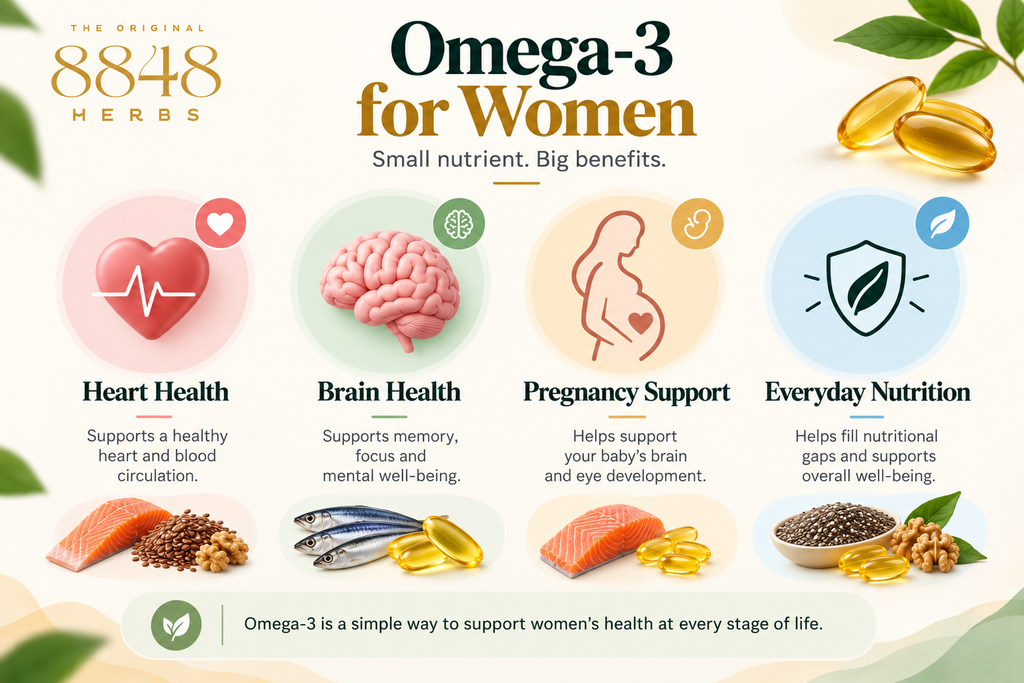
The basic role of omega-3 fatty acids is similar for women and men, but certain areas have particular relevance to women’s health.
Pregnancy is one example. DHA is important for fetal brain and retinal development, which is why omega-3 intake is often discussed during pregnancy and breastfeeding. However, supplementation should not be treated as a universal requirement, and the evidence for specific pregnancy outcomes is more nuanced.
Women can obtain omega-3 from fish, seafood, plant foods and, when appropriate, supplements.
Omega-3 and Women’s Heart Health
A balanced dietary pattern that includes fish and seafood can contribute to cardiovascular health. The American Heart Association recommends two servings of fish per week, particularly fatty fish.
Omega-3 During Pregnancy
DHA plays an important role in fetal development. Pregnant women should focus on consuming appropriate fish choices that provide omega-3 while following local guidance regarding fish species and mercury exposure.
Anyone considering an omega-3 supplement during pregnancy should discuss the product and dosage with their healthcare professional.
Omega-3 and Everyday Nutrition
For women who do not eat fish, foods such as flaxseed, chia seeds and walnuts provide ALA. Algal oil can also provide DHA and, depending on the formulation, EPA.
Omega-3 Fatty Acids Benefits: EPA, DHA and ALA Compared
When people search for omega 3 fatty acids benefits, it is easy to treat all omega-3s as though they are interchangeable.
They are not.
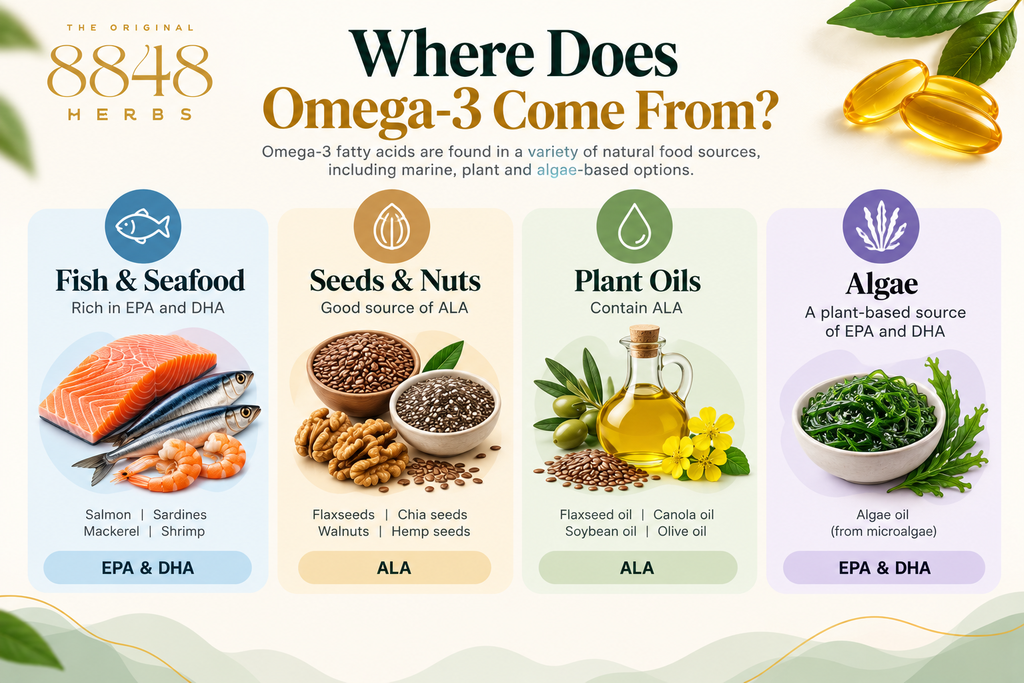
ALA, EPA and DHA have different food sources and different roles in the body.
ALA
ALA is found mainly in plant foods such as flaxseed, chia seeds, walnuts and certain vegetable oils.
It is an essential fatty acid, meaning it must be obtained through the diet. The body can convert ALA into EPA and DHA, but only in small amounts.
EPA
EPA is found primarily in fatty fish and seafood. It has been extensively studied in relation to cardiovascular health, blood triglycerides and other physiological processes.
DHA
DHA is found in fatty fish, seafood and algal oil. It is particularly concentrated in the brain and retina and is an important structural component of these tissues.
Which Omega-3 Do You Get From Your Food?
| Food | Main Omega-3 |
| Flaxseed | ALA |
| Chia seeds | ALA |
| Walnuts | ALA |
| Salmon | EPA + DHA |
| Sardines | EPA + DHA |
| Mackerel | EPA + DHA |
| Algal oil | Mainly DHA, depending on product |
Omega-3 Capsules Benefits: Are Supplements Worth Taking?
Omega-3 capsules are popular because they provide a convenient way to consume EPA and DHA without regularly eating fish.
But when comparing supplements, the most important number is not always the amount of “fish oil” listed on the front of the bottle.
A capsule may contain a certain quantity of fish oil but provide a smaller amount of actual EPA and DHA.
What Should You Check on an Omega-3 Label?
EPA content
How much EPA does the recommended serving provide?
DHA content
How much DHA does it provide?
Serving size
Is the stated amount for one capsule or several?
Source
Is it derived from fish, krill or algae?
Quality information
Does the manufacturer provide appropriate information about purity and testing?
This makes label reading particularly important when comparing different omega-3 capsules.
Fish Oil vs Algal Oil
Fish oil generally provides EPA and DHA.
Algal oil is particularly useful for people looking for a vegetarian or vegan source of DHA, with some products also providing EPA.
Neither should automatically be considered “better.” The right choice depends on dietary preferences, nutritional needs and the specific formulation.
How Much Omega-3 Do You Actually Need?
There is no single recommended daily intake for total omega-3s or for EPA and DHA for healthy adults.
There are, however, established adequate intake levels for ALA.
According to the NIH Office of Dietary Supplements, the adequate intake for adults is 1.6 g of ALA per day for men and 1.1 g per day for women. During pregnancy, the figure is 1.4 g per day, while breastfeeding women require 1.3 g per day.
These figures are for ALA and should not be interpreted as a recommended daily dose of fish oil.
For EPA and DHA, individual needs can vary considerably depending on diet and health status.
Why More Isn’t Always Better
A common assumption with supplements is that a higher dose must produce a greater benefit.
That is not necessarily the case with omega-3.
High-dose omega-3 preparations are sometimes used for specific medical purposes, but these are different from taking a standard supplement for general wellness.
Some large trials involving 4 g/day of omega-3 supplementation over several years found a slight increase in atrial fibrillation risk among people with cardiovascular disease or high cardiovascular risk.
Best Food Sources of Omega-3
Before reaching for capsules, consider what is already available on your plate.
Fatty fish are among the richest dietary sources of EPA and DHA. Salmon, sardines, mackerel and herring are particularly useful choices.
Plant foods provide ALA and can be especially useful for vegetarians and vegans.
Fish and Seafood Sources
- Salmon
- Sardines
- Mackerel
- Herring
- Oysters
- Certain varieties of tuna
Plant-Based Sources
- Flaxseed
- Chia seeds
- Walnuts
- Soybean oil
- Canola oil
Vegetarian and Vegan Options
People following vegetarian or vegan diets can obtain ALA from plant foods. For direct DHA intake, algal oil is an option because algae are the original source of the DHA that accumulates in many marine food chains.
What Happens If You Don’t Get Enough Omega-3?
True essential fatty acid deficiency is uncommon in healthy people. However, inadequate essential fatty acid intake can affect the skin, with deficiency associated with rough, scaly skin and dermatitis.
This is different from saying that every person with dry skin is deficient in omega-3.
Dryness can have many causes, including environmental exposure, skincare practices, dehydration, underlying skin conditions and other nutritional factors.
The better approach is to look at overall dietary quality rather than assuming that one symptom points to one nutrient deficiency.
Who May Need to Pay More Attention to Omega-3 Intake?
People who rarely eat fish or seafood may need to pay closer attention to their dietary sources of omega-3.
Those following vegetarian or vegan diets can focus on ALA-rich foods and consider algal sources of DHA where appropriate.
People with specific medical conditions may have different nutritional requirements and should follow professional advice.
Are Omega-3 Supplements Safe?
Omega-3 supplements are generally well tolerated, but they can cause side effects such as an unpleasant taste, bad breath, heartburn, nausea and gastrointestinal discomfort.
The potential for interactions with medicines is another reason not to treat supplements as completely risk-free.
Possible Side Effects
Some people may experience:
- Fishy aftertaste
- Bad breath
- Heartburn
- Nausea
- Diarrhoea
- Stomach discomfort
These effects are generally mild, but individual responses can vary.
Who Should Speak to a Healthcare Professional?
Speak with a healthcare professional before starting an omega-3 supplement if you:
- Take regular medication
- Have a diagnosed cardiovascular condition
- Are considering high-dose omega-3
- Are pregnant or breastfeeding
- Have another condition requiring dietary or supplement management
This is particularly important because prescription omega-3 products used for specific medical purposes are not the same as standard dietary supplements.
How to Add More Omega-3 to Your Daily Diet
Increasing omega-3 intake does not have to mean adding another capsule to your routine.
For people who eat fish, replacing some less healthy protein choices with fatty fish can be a simple approach. The American Heart Association recommends two servings of fish per week, particularly fatty fish.
For plant-based diets, seeds and nuts can be incorporated into everyday meals.
Easy Breakfast Ideas
Add ground flaxseed or chia seeds to:
- Oatmeal
- Smoothies
- Yoghurt
- Homemade granola
Easy Lunch Ideas
Try:
- Walnut and vegetable salads
- Chia or flaxseed sprinkled over meals
- Soy-based dishes
Easy Dinner Ideas
For non-vegetarians:
- Grilled salmon
- Sardines with vegetables
- Mackerel with whole grains
For vegetarians and vegans:
- Tofu or soy-based meals
- Walnut-based salads
- Flaxseed or chia-containing dishes
Omega-3: Food or Supplement?
This is not necessarily an either-or decision.
For many people, food should be the starting point because it provides omega-3 alongside protein, vitamins, minerals and other nutrients.
Supplements can provide a more concentrated source of EPA and DHA and may be useful in certain situations.
| Getting Omega-3 From Food | Taking a Supplement |
| Provides additional nutrients | Provides concentrated EPA/DHA depending on product |
| Fish provides EPA + DHA | Fish oil commonly provides EPA + DHA |
| Seeds and nuts provide ALA | Algal oil can provide DHA |
| Fits into an overall dietary pattern | Convenient for people who don’t eat fish |
| No need to measure capsules | Dosage can be clearly labelled |
The key is not to view supplements as a replacement for an otherwise poor diet.
Omega-3 Benefits: What Does the Research Actually Show?
The scientific picture is more nuanced than the typical supplement advertisement.
There is good evidence that EPA and DHA can reduce triglyceride levels. There is also substantial evidence supporting fish and seafood as part of a healthy dietary pattern.
But evidence for omega-3 supplements varies considerably depending on the health outcome.
What We Know
Triglycerides:
EPA and DHA can lower triglyceride levels.
Heart health:
Regular fish consumption is associated with cardiovascular benefits, but results from routine omega-3 supplementation trials have been mixed.
Brain health:
DHA is an important component of the brain, but supplementation has not consistently been shown to improve cognitive function in healthy older adults.
Skin:
Essential fatty acids are important for normal skin function, but evidence for using omega-3 supplements to treat specific skin conditions varies.
Pregnancy:
DHA has an important role in fetal development, but the effects of supplementation on specific pregnancy and infant outcomes are more complex.
This is why the most accurate way to discuss omega-3 is not to label it as a cure-all, but to understand which form of omega-3 is being discussed, what outcome is being studied and whether the evidence comes from food, observational research or controlled clinical trials.
The Bottom Line
Omega-3 fatty acids are essential fats with important roles throughout the body. ALA, EPA and DHA come from different sources and are not completely interchangeable, which is why understanding the difference matters when choosing foods or supplements.
For everyday nutrition, fatty fish, flaxseed, chia seeds, walnuts and other omega-3-rich foods can all have a place in a balanced diet. The American Heart Association recommends two servings of fish per week, particularly fatty fish.
FAQ
What are the main omega 3 benefits?
Omega-3 fatty acids are important components of cell membranes and are involved in normal functions throughout the body. EPA and DHA have been extensively studied in relation to cardiovascular health, triglycerides, brain function and eye health.
What are omega 3 capsules benefits?
Omega-3 capsules can provide concentrated EPA and DHA, depending on the formulation. They may be useful for people who do not regularly consume fish or who have a specific reason to supplement.
What are omega 3 benefits for women?
Omega-3s support normal cell function in women as they do in men. DHA is also important during pregnancy and fetal development. Women should consider their dietary intake and individual health needs when deciding whether supplementation is appropriate.
What are omega 3 fatty acids benefits?
Omega-3 fatty acids contribute to cell membranes and several physiological processes. ALA is an essential dietary fat, while EPA and DHA are particularly important forms found in seafood and certain supplements.
Which foods are highest in omega-3?
Fatty fish such as salmon, sardines, mackerel and herring are rich in EPA and DHA. Flaxseed, chia seeds and walnuts are good plant sources of ALA.
Is fish oil the same as omega-3?
No. Fish oil is a source of omega-3 fatty acids, generally EPA and DHA, but the amount and ratio can differ between products.
Can vegetarians and vegans get omega-3?
Yes. Flaxseed, chia seeds and walnuts provide ALA. Algal oil can provide DHA and, depending on the product, EPA.
Can I take omega-3 every day?
Omega-3 can be consumed daily through food, but whether a supplement is appropriate depends on the individual. There is no universal EPA/DHA supplement dose for everyone, and high doses should be used with appropriate professional guidance.
Is omega-3 good for skin?
Omega-3 fatty acids are important for normal cell function, and essential fatty acid deficiency can affect the skin. However, taking omega-3 supplements should not automatically be considered a treatment for a particular skin condition.
Is omega-3 good for the brain?
DHA is an important component of brain tissue and contributes to normal brain structure and function. However, research does not establish that omega-3 supplements universally improve memory or prevent cognitive decline.