

Table of Contents
- What Is Sea Buckthorn?
- Sea Buckthorn Nutrition: What’s Actually in It?
- Sea Buckthorn Benefits: What the Research Actually Says
- Sea Buckthorn Juice Benefits: Why the Juice Form Specifically?
- How to Use Sea Buckthorn Juice
- Sea Buckthorn Skin Benefits: Inside Out and Outside In
- Side Effects and Who Should Be Careful
- How to Choose a Good Sea Buckthorn Juice
- The Bottom Line
Quick Summary
Sea Buckthorn is a nutrient-rich Himalayan berry known for its vitamin C, vitamin E, antioxidants, carotenoids and Omega-7, which may support skin health, antioxidant protection, immunity and everyday wellness. This guide explains its key benefits, nutritional profile, uses and precautions, while highlighting 8848 Herbs’ Himalayan Sea Buckthorn Elixir as a convenient way to include Sea Buckthorn in your daily wellness routine.
Sea buckthorn benefits have been discussed in traditional medicine for centuries. But right now, this tiny orange berry is having a serious moment in modern wellness circles, and for good reason.
You’ve probably seen it pop up in skincare serums, health juices, and supplement aisles. Maybe you’ve wondered whether it actually lives up to the hype. Let’s get into the real picture: what sea buckthorn is, what the nutrition looks like, how to use it, and where to be careful.
No fluff. Just what’s actually worth knowing.
What Is Sea Buckthorn?
Sea buckthorn is a thorny shrub that produces small, bright orange berries. It grows in cold, high-altitude regions: the Himalayas, Ladakh, Siberia, parts of Europe and Central Asia. The plant is hardy by nature and survives extreme cold, poor soil, and harsh winds. That resilience shows up in the berry’s nutrient density.
The scientific name for the plant is Hippophae rhamnoides. It’s been used in Ayurvedic and Tibetan medicine for well over a thousand years. Traditional practitioners used it for everything from wound healing to digestive support to even skin care.
What makes it unusual is the range of active compounds packed into a single small berry. Most fruits are strong in one or two nutrients. Sea buckthorn brings vitamins, fatty acids, antioxidants, and minerals together in a combination that’s genuinely rare in the plant world.
Sea Buckthorn Nutrition: What’s Actually in It?
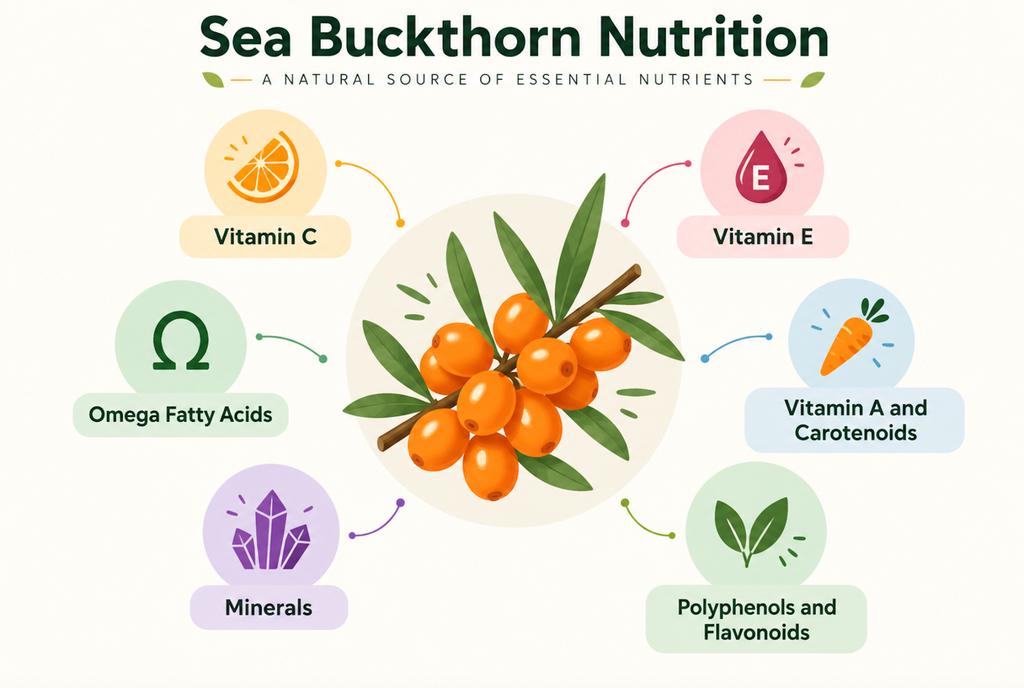
This is where sea buckthorn earns its reputation. The nutritional profile is unusually dense for a berry.
Vitamin C
Sea buckthorn is one of the richest plant sources of vitamin C in the world. Published research consistently shows vitamin C content is significantly higher than in oranges, with figures varying depending on the growing region, harvest time, and processing method. Berries sourced from high-altitude Himalayan regions tend to show particularly high concentrations, partly because of the UV stress, by producing more protective compounds.
Vitamin E
The berry contains multiple forms of vitamin E, including both tocopherols and tocotrienols. This matters because most food sources of vitamin E deliver only one form. The combination found in sea buckthorn is associated with stronger antioxidant activity than single-form sources.
Omega Fatty Acids
This is the part that sets sea buckthorn apart from almost every other fruit. It contains omega-3, omega-6, omega-7, and omega-9 fatty acids. That’s not a common combination. Omega-7, in particular, is rare in plant sources. Sea buckthorn pulp oil and seed oil are among the few plant-based sources that contain it in meaningful amounts.
Vitamin A and Carotenoids
The orange colour isn’t cosmetic. It comes from a high concentration of carotenoids, including beta-carotene, which the body converts to vitamin A. The carotenoid content of sea buckthorn is substantially higher than that of the most commonly consumed fruits and vegetables.
Minerals
Potassium, calcium, iron, and magnesium are all present in meaningful amounts relative to what you’d expect from a fruit-based source.
Polyphenols and Flavonoids
Sea buckthorn contains a range of polyphenolic compounds, including quercetin and isorhamnetin, which are associated with antioxidant and anti-inflammatory properties in published research.
Sea Buckthorn Benefits: What the Research Actually Says
Let’s be clear about something upfront. A lot of content on this topic presents traditional uses and early-stage research as if they’re settled medical conclusions. They’re not. What follows is an honest summary of what’s supported, what’s promising but still being studied, and what’s mostly traditional use.
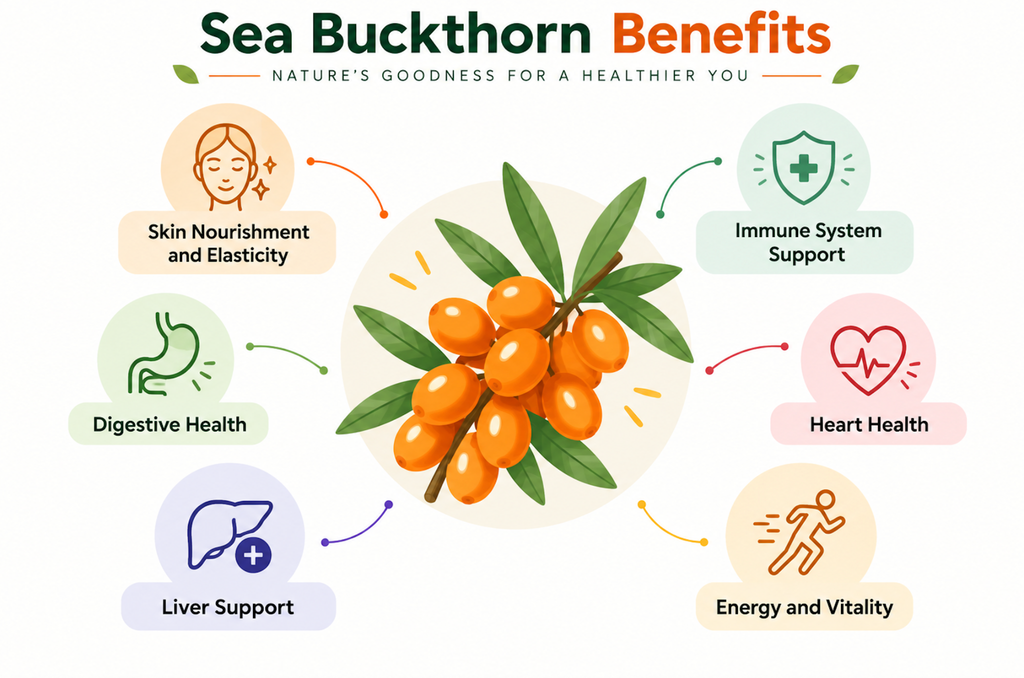
Skin Nourishment and Elasticity
Sea buckthorn skin benefits are probably the most talked-about application right now, and this is also where the research is most developed.
The fatty acid profile, particularly omega-7 (palmitoleic acid), supports skin membrane integrity. Omega-7 is actually a natural component of human skin tissue. Supplying it through diet or topical application is associated with supporting skin hydration and elasticity in several published studies.
The carotenoid and vitamin E content adds to this. Both are associated with protecting skin cells from oxidative stress, which contributes to visible signs of ageing over time.
This is why sea buckthorn oil appears in a growing number of skincare formulations, and why the juice is increasingly recommended as a nutritional support for skin health from the inside.
Immune System Support
The vitamin C content alone makes sea buckthorn a strong candidate for immune support. But the combination of vitamin C, vitamin E, carotenoids, and polyphenols in combination creates a broader antioxidant effect than any single compound would produce on its own.
Antioxidants help the body manage oxidative stress, which is linked to immune function, inflammatory response, and general cellular health. Sea buckthorn’s density across multiple antioxidant types is part of why it’s been used traditionally as a general health tonic.
Digestive Health
Sea buckthorn pulp is high in fibre and contains compounds that have been studied for their effect on the gastrointestinal lining. Some research suggests that sea buckthorn oil may support the integrity of the mucosal lining of the digestive tract, which is relevant for people dealing with issues like gastric discomfort or ulcers.
This is still an area where more human clinical trials are needed. The existing research is promising but not conclusive enough to make strong claims.
Heart Health
The omega fatty acid profile, particularly the omega-3 and omega-7 content, has drawn interest for cardiovascular support. Some studies have looked at sea buckthorn’s potential role in supporting healthy cholesterol levels and reducing oxidative stress markers associated with heart health.
Again, this is promising research territory rather than an established medical application.
Liver Support
There’s a body of research, mostly from animal studies and some smaller human trials, looking at sea buckthorn’s potential hepatoprotective (liver-protecting) properties. The flavonoids and carotenoids in the berry have been studied for their reduction in oxidative stress in liver tissue.
Energy and Vitality
Traditional use of sea buckthorn as a general vitality tonic is widespread across Himalayan, Tibetan, and Russian folk medicine. The dense nutrient profile, particularly the combination of Vitamin B, iron, and fatty acids, supports the biological basis for this use, even if it hasn’t been studied as rigorously as some of the other applications.
Sea Buckthorn Juice Benefits: Why the Juice Form Specifically?
Sea buckthorn is available in several forms: oil, powder, dry berry, leaf tea, and juice. Each form has a different nutrient profile because different parts of the plant concentrate different compounds.
The juice, made from the pulp, is particularly rich in water-soluble nutrients such as vitamin C, B vitamins, minerals, and polyphenols. It’s one of the more bioavailable forms for getting the berry’s full nutritional spectrum in a single serving.
Sea buckthorn juice benefits are most relevant for people looking for a daily nutritional supplement rather than a targeted topical application. You get the immune support, the antioxidant load, the digestive fibre, and the mineral content in one drink.
It’s also one of the more palatable ways to consume sea buckthorn. The raw berry is intensely tart. Good quality juice balances that without stripping out the active compounds.
How to Use Sea Buckthorn Juice
This is practical and worth getting right.
Dosage
There’s no universally established clinical dosage for sea buckthorn juice. Most producers and traditional practitioners suggest 20–30 ml per day for general wellness uses. Some suggest up to 50 ml for more targeted support. Starting on the lower end and adjusting based on how your body responds is a sensible approach.
When to Take It
Most people take sea buckthorn juice in the morning, either on its own or diluted with water. The vitamin C content means it’s best taken with or before food rather than on an empty stomach if you’re sensitive to acidity.
How to Mix It
Sea buckthorn juice has a strong, tart flavour. Mixing it with water, smoothies, or fresh juice is common. Some people add it to yoghurt or salad dressings. It works well anywhere you’d use a concentrated fruit juice.
Storage
Once opened, sea buckthorn juice should be refrigerated and consumed within the timeframe specified on the packaging. The vitamin C content degrades with prolonged exposure to heat and light, so storage conditions actually matter here.
Sea Buckthorn Skin Benefits: Inside Out and Outside In
It’s worth separating these two applications because they work differently.
From the inside: Consuming sea buckthorn juice regularly supplies the skin with vitamin C (needed for collagen synthesis), vitamin E (antioxidant protection), carotenoids (UV stress protection), and omega fatty acids (membrane support). These work over time, and not overnight.
From the outside: Sea buckthorn oil applied topically delivers fatty acids and fat-soluble vitamins directly to the skin. This is where you’ll find it in serums and facial oils. The omega-7 content in particular is valued for its compatibility with skin tissue.
The combination of both approaches, dietary intake and topical application, is where sea buckthorn skin benefits are most consistently reported. One without the other is still useful, but together they cover different mechanisms.
Side Effects and Who Should Be Careful
Sea buckthorn is easy for most people, but there are things worth knowing.
Acidity
The berry is naturally very acidic. People with acid reflux, GERD, or sensitive stomachs should start with small amounts and monitor their response. Diluting the juice is advisable.
Blood Thinning
Some research suggests sea buckthorn may have mild anticoagulant effects. If you’re on blood-thinning medication (like warfarin), speak to a doctor before adding sea buckthorn juice to your daily routine.
Blood Pressure
There’s some evidence that sea buckthorn may influence blood pressure. If you’re on medication for hypertension, check with your doctor first.
Pregnancy and Breastfeeding
There isn’t enough clinical data to confidently establish safety during pregnancy or breastfeeding at supplemental doses. Caution is the right approach here.
Allergies
Sea buckthorn allergies are rare but documented. If you have known sensitivities to berries or related plants, introduce them gradually.
Color
Sea buckthorn juice will stain. Hands, clothes, surfaces. That’s not a health concern, just a practical one worth knowing.
How to Choose a Good Sea Buckthorn Juice
Not all sea buckthorn juices are the same. A few things to check:
Sourcing matters. High-altitude, cold-climate berries tend to have higher nutrient concentrations. Himalayan and Ladakh-sourced sea buckthorn is particularly valued for this reason.
Processing method. Cold-pressed or minimally processed juice retains more of the heat-sensitive nutrients, especially vitamin C.
No added sugar. Many commercial sea buckthorn juices add sweeteners to offset the tartness. Look for pure or minimally blended options if you want the nutritional benefit without the sugar load.
Pulp vs. seed oil. These are different products with different nutrient profiles. Pulp juice is richer in water-soluble vitamins and minerals. Seed oil is richer in omega fatty acids and fat-soluble vitamins. Know what you’re buying and why.
The Bottom Line
Sea buckthorn benefits are real, and the nutritional profile is genuinely unusual. It’s not a miracle berry, but it is one of the more nutrient-dense plant foods you can add to a daily routine, particularly for skin health, immune support, and general antioxidant intake.
The juice form is a practical, bioavailable way to get the full spectrum of what the berry offers. Choose a clean, minimally processed product from a reputable source, start with a modest daily amount, and give it enough time.
If you have any existing health conditions or are on medication, run it by your doctor first. That applies to any supplement, including sea buckthorn.
FAQs
Her Perspective
Can sea buckthorn juice help with skin glow and elasticity?
Yes, and this is one of the better-supported applications. The combination of vitamin C, vitamin E, carotenoids, and omega-7 fatty acids addresses several of the biological mechanisms behind skin health. Results from dietary intake are gradual — think weeks, not days.
Is sea buckthorn juice good for hair?
The fatty acid and vitamin profile is associated with scalp and hair health in traditional use, and some early research supports this. It’s not the primary studied application, but it’s a reasonable extension of what the nutrients do.
Can I use it during my period?
The iron content makes it relevant for women during menstruation. The mild anticoagulant properties mentioned earlier are worth noting if you already have heavy flow; in that case, speak to your doctor first.
His Perspective
Does sea buckthorn juice actually boost energy?
The B vitamins, iron, and fatty acid content support general metabolic function, which contributes to energy levels over time. It’s not a stimulant. It’s nutritional support, which works differently and more sustainably.
How long before I notice any difference?
For most people, consistent daily use over four to six weeks is where noticeable changes in energy, skin, or digestion tend to show up. Expecting results in a week is unrealistic.
Can I take it with other supplements?
Generally yes, but flag the blood-thinning consideration if you’re on any medication. With food-form supplements like protein powders or multivitamins, there’s typically no issue.
Is the juice better than the capsule form?
Juice delivers water-soluble nutrients more readily. Capsules are more convenient and more concentrated for fat-soluble compounds. Neither is universally better — it depends on what you’re trying to address.
Keep reading
All Sea Buckthorn Science →- Sea Buckthorn Science Why High-Altitude Sea Buckthorn Is More Potent: The Science of 8,848 Metres 11 min read
- Ingredient Education Omega-3 Benefits: How It Supports Heart, Brain, Skin and Overall Health 15 min read
- Wellness & Nutrition Premature Ejaculation: Causes, Symptoms and Treatment Options Explained 11 min read