

Table of Contents
- What Is Premature Ejaculation?
- What Are the Symptoms of Premature Ejaculation?
- What Causes Premature Ejaculation?
- Is Premature Ejaculation Normal?
- How Is Premature Ejaculation Diagnosed?
- Premature Ejaculation Treatment: What Are the Options?
- Can Lifestyle Changes Help?
- How to Stop Premature Ejaculation?
- How to Cure Premature Ejaculation: Is There a Permanent Cure?
- When Should You See a Doctor?
- The Bottom Line
- FAQ
Quick Summary
Premature ejaculation involves ejaculation that occurs earlier than desired, with limited control and personal or relationship distress. Causes can include psychological factors such as anxiety and stress, as well as biological factors, and treatment may involve behavioural techniques, counselling, topical treatments or prescription medicines.
Premature ejaculation (PE) is one of the most common male sexual concerns. It generally refers to ejaculation that happens sooner than a person or their partner would like, along with difficulty delaying ejaculation and associated frustration or distress.
While occasional early ejaculation can happen to anyone, persistent premature ejaculation can affect confidence, relationships and overall sexual wellbeing. The good news is that PE can often be managed, and several treatment approaches are available depending on the underlying cause.
What Is Premature Ejaculation?
Premature ejaculation is a sexual dysfunction in which ejaculation occurs sooner than desired, a person has difficulty delaying ejaculation, and the situation causes distress.
There is no single experience that defines PE for every person. Sexual expectations, relationship circumstances and individual preferences can all influence whether ejaculation feels “too soon.”
Clinicians may consider factors such as how consistently early ejaculation occurs, the person’s ability to control it, how long the problem has been present and whether it causes significant distress.
The 3 Things That Matter
EARLY EJACULATION
It happens sooner than the person would prefer.
LIMITED CONTROL
There is difficulty delaying ejaculation.
DISTRESS
The experience causes frustration, embarrassment, anxiety or relationship difficulties.
All three factors are important when discussing premature ejaculation.
What Are the Symptoms of Premature Ejaculation?
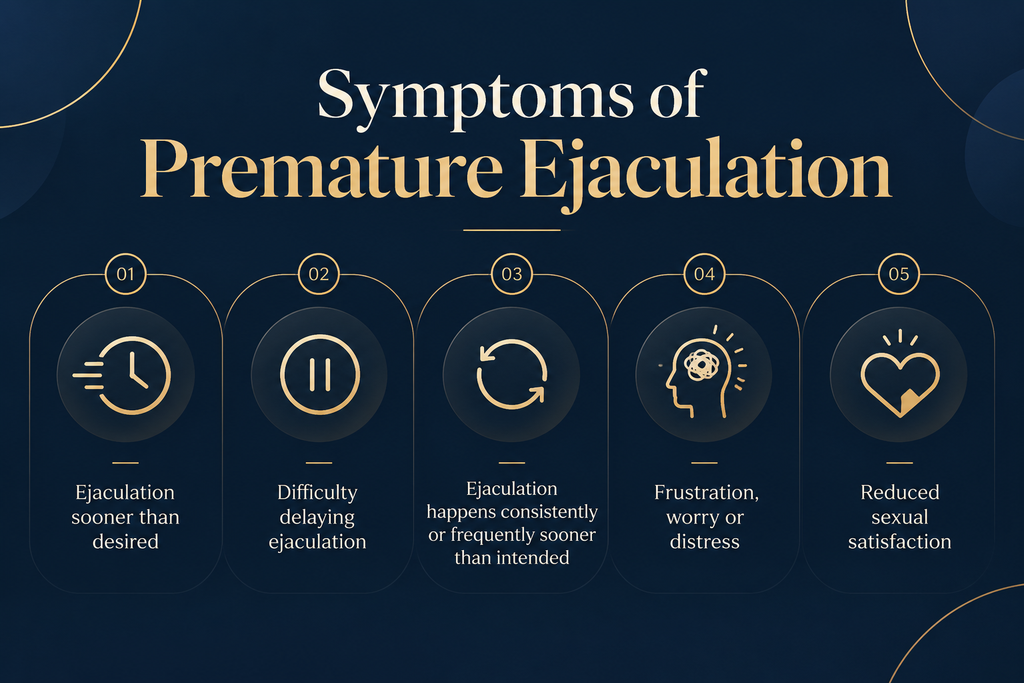
The most noticeable symptom is ejaculating earlier than desired during sexual activity. However, premature ejaculation is not defined by timing alone.
Common experiences may include:
- Difficulty delaying ejaculation
- Feeling that ejaculation happens with little control
- Repeatedly ejaculating sooner than desired
- Frustration or embarrassment after sex
- Anxiety about sexual performance
- Avoiding sexual intimacy because of concerns about ejaculation
- Relationship tension related to sexual experiences
Occasional early ejaculation does not necessarily mean that someone has a sexual disorder. It becomes more important to seek help when the problem is persistent and causes ongoing distress.
What Causes Premature Ejaculation?
There is no single cause of premature ejaculation.
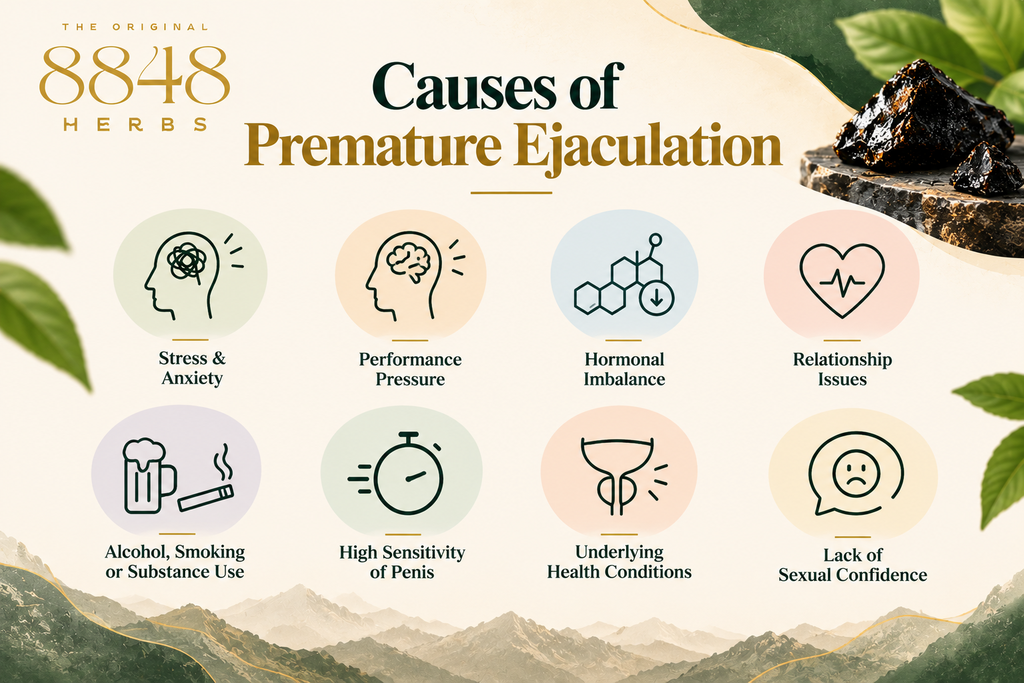
For some people, psychological or relationship factors may play a major role. For others, biological factors may contribute. In many cases, several factors can exist at the same time.
Psychological and Emotional Factors
Anxiety is one of the commonly discussed factors associated with PE. Performance anxiety can create a cycle in which worrying about ejaculating too quickly makes it harder to remain relaxed during sexual activity.
Other possible factors include:
- Stress
- Performance anxiety
- Relationship difficulties
- Depression or emotional distress
- Previous negative sexual experiences
- Worry about sexual performance
This does not mean PE is “all in your head.” Psychological factors and physical responses can influence each other.
The Anxiety–PE Cycle
Worry about performance
↓
Increased tension and focus on ejaculation
↓
Less perceived control
↓
Ejaculation sooner than desired
↓
More anxiety next time
Breaking this cycle can be an important part of treatment.
Physical and Biological Factors
Research has also identified several biological factors that may be associated with premature ejaculation.
These can include differences in neurotransmitter activity, hormonal factors, inflammation involving the prostate or urethra, erectile difficulties and other health conditions.
For some people, PE may also occur alongside another sexual or medical concern.
This is why persistent or newly occurring premature ejaculation should not simply be assumed to be caused by anxiety.
A healthcare professional can help determine whether another underlying issue needs attention.
Is Premature Ejaculation Normal?
Occasional early ejaculation is common.
A person may ejaculate sooner than expected because of excitement, a long gap between sexual activity, anxiety, a new partner or simply because of the circumstances of that particular sexual experience.
That does not automatically mean they have premature ejaculation.
The difference is usually consistency, control and distress.
Occasional vs Persistent
| Occasional Early Ejaculation | Persistent PE |
| Happens from time to time | Happens repeatedly |
| May have an obvious situational reason | May occur across different situations |
| Usually does not cause significant distress | Can cause ongoing frustration or anxiety |
| May resolve without treatment | May benefit from professional evaluation |
How Is Premature Ejaculation Diagnosed?
There is usually no single test that can diagnose premature ejaculation.
A healthcare professional will generally ask about sexual history, ejaculation patterns, level of control and how much distress the problem causes.
They may also ask about:
- When the problem started
- Whether it has always been present or developed later
- How frequently it occurs
- Erectile function
- Medications
- General health
- Relationship or psychological factors
If another health condition is suspected, additional evaluation may be recommended.
Being honest during this conversation can make diagnosis and treatment much easier. Sexual health concerns are common medical issues, and there is no need to feel embarrassed about discussing them.
Premature Ejaculation Treatment: What Are the Options?
There is no single treatment that works for everyone.
The best approach depends on whether PE is lifelong or acquired, what factors are contributing to it and what the individual is comfortable trying.
Treatment can include behavioural techniques, psychological support, topical treatments and prescription medication.
1. Behavioural Techniques
Behavioural approaches are often used to improve awareness and control during sexual activity.
One commonly discussed approach is the stop-start technique.
The basic idea is to pause sexual stimulation when ejaculation feels close, allow arousal to decrease, and then resume.
Another technique sometimes used is the squeeze technique, where stimulation is paused and gentle pressure is applied to the penis for a short period before sexual activity resumes.
These techniques generally require practice rather than producing an immediate result.
Stop-Start Technique
Stimulate
↓
Notice increasing arousal
↓
Pause before ejaculation
↓
Allow arousal to decrease
↓
Resume when ready
The goal is to become more aware of arousal levels and develop better control over time.
2. Counselling and Sex Therapy
When anxiety, stress, relationship difficulties or performance concerns contribute to PE, counselling or sex therapy can be useful.
A therapist may help address performance anxiety, negative thoughts about sex and communication between partners.
For some people, combining psychological support with another treatment approach may be more effective than focusing on only one factor.
Sexual wellness is not simply about delaying ejaculation. Feeling comfortable, communicating openly and reducing pressure around sexual performance can also make a meaningful difference.
3. Topical Treatments
Some topical creams or sprays contain local anaesthetic ingredients that reduce penile sensitivity and can help delay ejaculation.
These products should be used according to their instructions. Excessive application can reduce sensation too much and may potentially transfer the anaesthetic to a partner.
If someone has sensitive skin, allergies or other concerns, they should speak with a healthcare professional before using such products.
Herbal or botanical delay creams are another category available in the market, but “natural” does not automatically mean clinically proven or suitable for everyone.
4. Prescription Medicines
Doctors may sometimes prescribe medicines to help manage premature ejaculation.
Certain antidepressants, particularly some selective serotonin reuptake inhibitors (SSRIs), have been studied for this purpose. Other prescription options may also be considered depending on the individual.
These medicines should only be used under appropriate medical guidance.
It is not advisable to start, stop or change prescription medication based solely on information found online.
Can Lifestyle Changes Help?
Lifestyle changes cannot be considered a guaranteed cure for premature ejaculation, but healthy habits can support overall sexual wellbeing.
Regular physical activity, adequate sleep, stress management and a balanced diet can contribute to better general health.
Reducing excessive alcohol consumption and avoiding smoking can also support sexual health.
If anxiety is contributing to PE, relaxation techniques and stress management may be particularly useful.
A Healthy Sexual Wellness Routine
Sleep well
→ Supports overall physical and mental wellbeing
Stay active
→ Supports cardiovascular and general health
Manage stress
→ May reduce performance-related anxiety
Communicate openly
→ Can reduce pressure between partners
Seek professional help when needed
→ Helps identify underlying causes and appropriate treatment
How to Stop Premature Ejaculation?
If you’re searching for how to stop premature ejaculation, it is important to set realistic expectations.
There is rarely a single trick that instantly solves the problem.
Instead, improvement may involve understanding your triggers, developing greater awareness of arousal, addressing anxiety or relationship concerns and exploring appropriate treatment options.
Some people may benefit from behavioural techniques, while others may need counselling, topical treatment or prescription medication.
The right approach depends on the individual.
How to Cure Premature Ejaculation: Is There a Permanent Cure?
The word “cure” can be misleading because premature ejaculation does not have one universal cause or one universal treatment.
Some people experience significant and lasting improvement after addressing the factors contributing to their PE. Others may need ongoing strategies to manage symptoms.
If premature ejaculation developed suddenly after previously normal sexual function, it is particularly worth discussing with a healthcare professional because an underlying medical, psychological or sexual-health issue may be contributing.
The goal should not simply be to chase a particular number of minutes. The bigger goal is better control, reduced distress and a healthier sexual experience.
When Should You See a Doctor?
Consider speaking with a healthcare professional if:
- Premature ejaculation happens frequently
- You regularly feel unable to control ejaculation
- The issue is causing significant distress
- You are avoiding intimacy because of it
- PE developed suddenly after previously normal sexual function
- You also experience erectile difficulties
- You have pain or other genital or urinary symptoms
- The problem is affecting your relationship
A doctor, urologist or qualified sexual-health professional can help identify potential causes and discuss appropriate treatment.
Can a Delay Cream Help With Premature Ejaculation?
Delay creams are designed to help reduce penile sensitivity and potentially delay ejaculation.
However, not all delay creams work in the same way. Some use local anaesthetic ingredients, while others are formulated with botanical or herbal ingredients.
If choosing a delay cream, check the ingredient list, directions for use and any relevant warnings. Avoid assuming that a product will “cure” premature ejaculation simply because it can potentially help delay ejaculation during sexual activity.
For people looking for an herbal approach, products such as 8848 Organic Delay Cream are positioned around botanical ingredients including saffron, nutmeg, clove and cinnamon.
It is important to distinguish between a product intended to support delayed ejaculation and a medical treatment for the underlying causes of premature ejaculation.
The Bottom Line
Premature ejaculation is common, but persistent symptoms can be frustrating and affect confidence and relationships. Understanding the possible causes is the first step toward finding an appropriate solution.
Behavioural techniques, counselling, topical products and prescription treatments can all have a role depending on the individual. Rather than looking for a quick “cure,” focus on better control, reduced anxiety and a healthier overall sexual experience.
If premature ejaculation is persistent, newly developed or causing significant distress, speaking with a qualified healthcare professional is the safest way to understand the cause and explore treatment options.
FAQ
What is the meaning of premature ejaculation?
Premature ejaculation refers to ejaculation that occurs sooner than desired, combined with difficulty delaying it and associated personal or relationship distress.
What causes premature ejaculation?
PE can have psychological, relationship-related and biological contributors. Anxiety, stress, erectile difficulties, hormonal factors and other health issues may play a role.
How can I stop premature ejaculation?
Treatment depends on the cause. Behavioural techniques, counselling, topical treatments and prescription medicines may help different people. A healthcare professional can help determine the most appropriate option.
Can premature ejaculation be cured?
Many people can experience substantial improvement, but there is no single cure that works for everyone. Treatment depends on the underlying factors contributing to PE.
Is premature ejaculation a sign of a health problem?
Not necessarily. Occasional early ejaculation is common. However, persistent or newly developed PE can sometimes occur alongside other medical or psychological concerns and may warrant professional evaluation.
Does stress cause premature ejaculation?
Stress and performance anxiety can contribute to premature ejaculation or make existing symptoms worse. Managing stress may therefore be part of a broader treatment approach.
Can exercise help with premature ejaculation?
Regular physical activity supports overall physical and mental health, but exercise alone should not be considered a guaranteed treatment for PE.
Are delay creams safe?
Safety depends on the ingredients and how the product is used. Topical anaesthetic products should be used according to their instructions because excessive use can cause excessive numbness or transfer to a partner.